Sometimes cinema does not simply choose a landscape: it passes through it, listens to it and ends up entrusting it to collective memory
Sometimes cinema does not simply choose a landscape: it passes through it, listens to it and ends up entrusting it to collective memory. This happened to Salina with Il Postino, the film that transformed the island’s reserved soul into an image destined to travel the world.
On 25 March 1996, during the 68th Academy Awards, the film won the Oscar for Best Original Dramatic Score, composed by Luis Bacalov. A recognition that internationally consecrated Massimo Troisi’s final work and that, still today, remains tied to the poetic imagination of the Aeolian Islands.
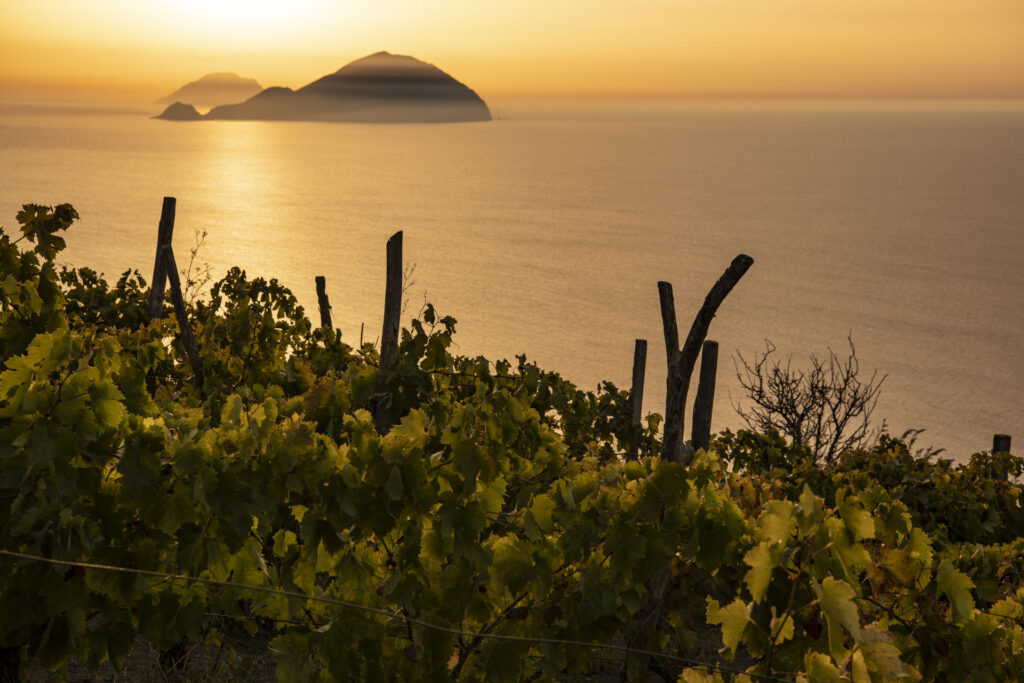
Thirty years after that date, the success of Il Postino continues to live among the landscapes of Salina. The island was not merely a setting, but an essential part of the story: with its light, its sea, its silences and that suspended rhythm that still defines its soul today.
In those years, Signum also became part of this story. During their stay in Salina, Massimo Troisi, Philippe Noiret, Maria Grazia Cucinotta and all the actors and crew of Il Postino found their home on the island here. After days spent filming, Signum became the place of return, rest and hospitality.
Within the walls of the Caruso family home, actors and crew found each evening the warmth of authentic hospitality, made of attention, care and natural elegance. A welcome that then, as now, reflected the vision of Clara Rametta and Michele Caruso, founders of Signum.
From that period also came a bond destined to last over time. Maria Grazia Cucinotta, who played Beatrice in Il Postino, became a friend of Clara Rametta. A deep friendship, born during the days of the film and continued for thirty years, until Clara’s passing.
A relationship that perhaps tells, better than any definition, what Signum has always represented: not only a place of hospitality, but a place capable of creating bonds that remain over time.
That stay has remained intertwined with the history of Signum and with that of the film. A silent memory that still belongs today to the memory of the hotel and the island.
Watching Il Postino again thirty years later means returning to a moment when Salina opened itself to the gaze of the world through the poetry of cinema. An island that did not need to transform itself to be told, because precisely in its authenticity it found its deepest strength.
And perhaps this is also why the film continues to speak to the present. Because it preserves the value of essential things: the sea, time, words, the encounter between people and places.
Thirty years after that Oscar, Il Postino remains an important page in the history of cinema. But for Salina, it is also something more: a shared memory, linked to its landscapes, its identity and the places that accompanied its story.